Palestine was drastically changed due to the increase of displaced persons and the creation of Israel. The betrayal and distrust that stemmed from this era is still prevalent in the region today. On both the Israeli and Palestinian sides of the Israel debate are feelings of betrayal as well as entitlement to a home and political autonomy. The creation of Israel in Palestine failed to solve the displaced persons issue; it only pushed it on another group. In 1948 there was a mass exodus from Palestine due to either perceived or real threat of annihilation. Many years later Palestinians were allowed the right to visit a place that had once been their home. These returns were filled with incredibly nuanced emotional responses. Nakba or “the catastrophe” is a term used by many Palestinians to describe their mass exodus explains the intense emotional connection that people had to their homeland being taken away from them and persistence of that narrative through the present day.
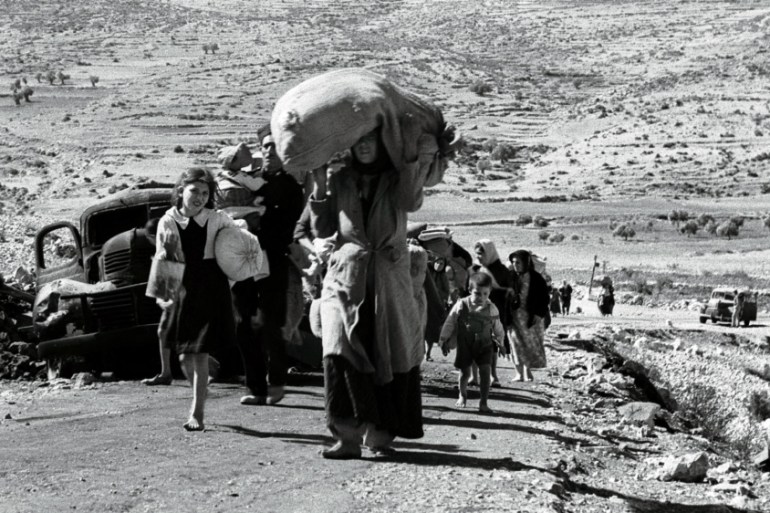
In Return to Half-Ruins, by Lila Abu-Lughod anthropologist and social scientist, the gravity of Palestinian departure can be felt. The will to fight for the right to return to their homeland is strong. But, as in most movements there are levels of devotion and differing opinions on how to achieve their aims. When Abu-Lughod tours Jaffa with her father she can see the pain it brings up and the anger towards the changes made to the place he once called home. It’s interesting to receive this story from the daughter’s perspective because she does not have the direct connection to the land that her father does. She perceives his tour of Palestine through her Palestinian-American background. I thought it was interesting when she mentioned that the tour her father gave her was not original that it was the same tour he had given to many before her, it was “about claiming and reclaiming the city in which he had been born” (17). This shows that he has an agenda and was never passively waiting for Jaffa to be returned to him.
In Returning to Haifa, by Ghassan Kanafani Palestian author and a leading member of the Popular Front for the Liberation of Palestine, the hurt of being displaced from one’s home is again evident. The story of the forgotten/abandoned child is used to demonstrate the loss of the Palestinian homeland. The discovery of Khaldun and his Israeli upbringing demonstrates just how similar Palestinians and Israeli peoples are, just that there is this unconquerable difference between them.
The two stories of return to Palestine demonstrate longing to return to their Palestinian homeland. This is also a sense of nationalism that was steeped into rhetoric at some point during the history of the conflict. This politicization of the issue fundamentally changed the way it was perceived and dealt with on both sides.


You make a point that certainly transcends any localized discussion of conflicts between two groups of people. Ultimately, everyone is not as different as we make them out to be. Khaldun was an Arab who was raised in an Israeli home. He seemed to be just as different from his birth parents as his adoptive mother was different from them. The difference lays in their upbringing and worldview, not in who they are ethnically. It is an incredibly tough subject to approach, but it is certainly an interesting point.
I also thought it was interesting that Ibrahim’s tour was about claiming and reclaiming Jaffa. As you said, he wasn’t going to sit back and wait for his home to be returned he was actively doing something about it. I think he even tried to do so with his career choice once he immigrated to the US. He was reclaiming his life by making sure that the stories of displaced Palestinians, like him, were not forgotten.
I personally really enjoyed your analysis of Kanafani’s story, and the use of realistic fiction to emphasize the main topics of the struggles that the Palestinians felt as they were forced out of their homes. Overall, I think that you did an excellent job throughout this post at evaluating the arguments and perspectives of the authors, good job.