As the Second World War came to a close, the Allies were faced with a very difficult decision. Having already won the won in Europe, the Allies, but primarily the United States, had to decide whether invade the island of Japan or to end the war quickly with the dropping of an atomic bomb. Neither option seemed to be the clear pick as a land invasion would have caused the American death toll to rise by the hundreds of thousands and an atomic blast would kill hundreds of thousands of innocent civilians. Ultimately, however, the United States opted for the latter and on August 6, 1945 an atomic bomb was dropped on the city of Hiroshima. Due to the fact that Japan still refused to surrender, a second bomb was dropped on the city of Nagasaki three days later. In total, approximately 129,000 civilians and military personnel lost their lives and the dropping of the bombs has been a source of debate ever since.
When the smoke cleared there were many who had been badly injured or poisoned with radiation. Some had deformities and were too ashamed to show themselves in public. In his work Reconstructing the Hiroshima Maidens, David Serlin explains that many American surgeons wanted to help those who had severe burns to look normal again. The surgeons saw it as their duty to do so. Serlin implies that the surgeons did this as a type of propaganda for the United States in that if the surgeons could fix the faces of many of the people who had been harmed, then the public would not view the atomic bomb droppings in such a negative light.
Following the atomic blasts, there were approximately 2,000 post-atomic blast deaths. These deaths resulted from a number of things including skin cancer and radiation poisoning. Today the Japanese government recognizes those men and women who were affected by the blasts as hibakusha which in Japanese literally means “explosion-affected people.” In Japan today, however, many people discriminate against the hibakusha because they believe that their deformations and diseases are hereditary and can be passed on to their children. Overall, the bombs that were dropped on Hiroshima and Nagasaki had devastating impacts not only on a physical level, but also an emotional and psychological one as well.

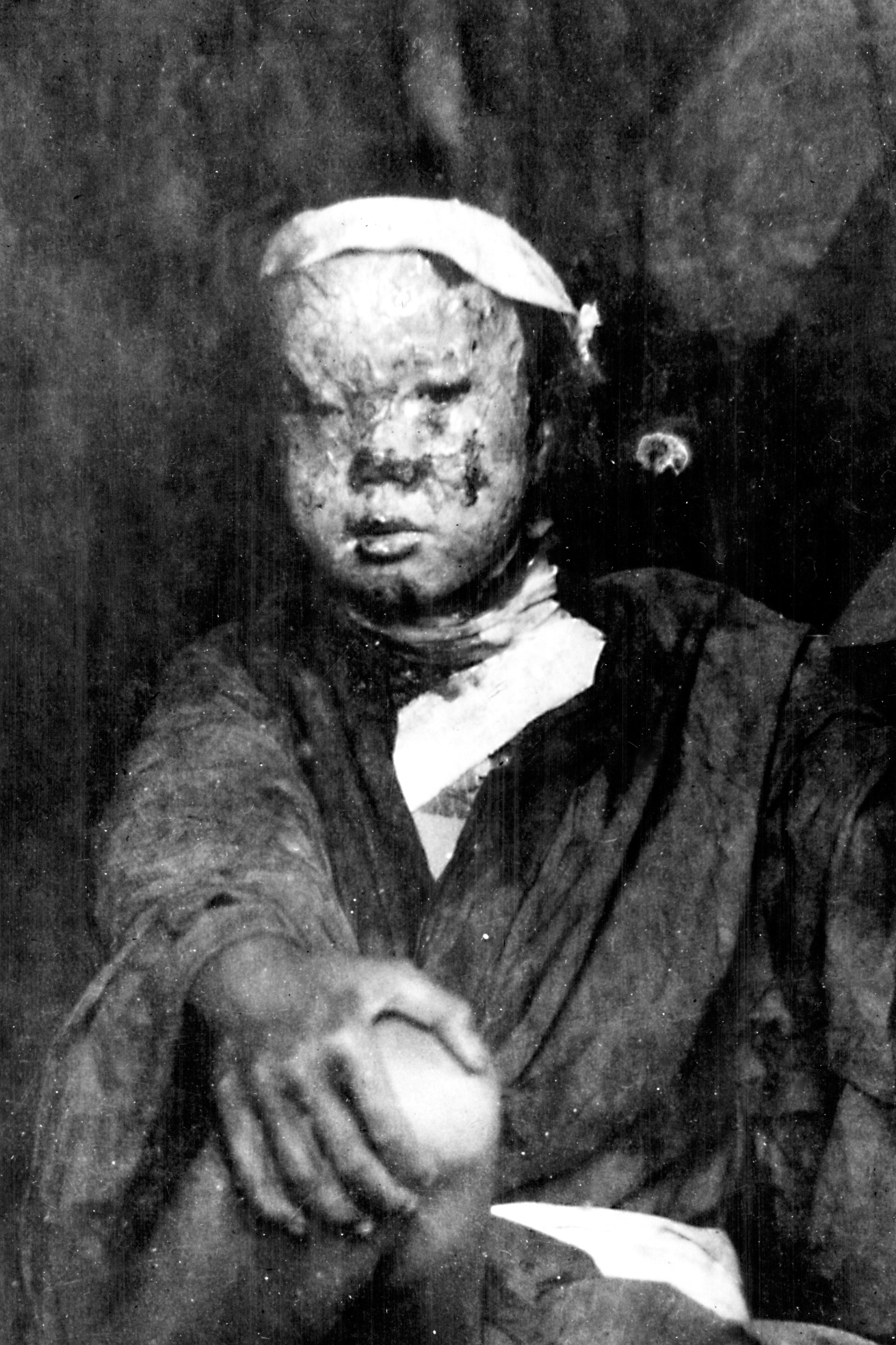
A Japanese citizen who has been deformed due to the atomic blast.


I like that you touched on both physical and psychological injuries of Japanese atomic bomb victims. We often, as explored in the Hiroshima Maidens article, only considered physical injuries when thinking of the bomb victims which I think is problematic because, obviously, the bombs affected more than just Japanese individual bodies but also their minds and the collective Japanese culture’s identity.
I like that you focused on the psychological aspect of the Japanese victims. I think many people unknowingly pass over what they are not able to see. Before this week, I had no idea that the psychological trauma was passed down through generations out of the misplaced fear of hereditary deformities.
I like how you related this to modern times and talked about current Japanese views of those affected by the bombs. It made me consider how other countries handled similar things, such as how Germans viewed those from East Berlin, even after the wall was torn down.
I really find the cultural aspect of the Hibakusha fascinating in a dark, morbid kind of way. For it seems that even though the Japanese government recognizes them as a group that was severely affected by the atomic blast; culturally they are kind of looked down upon by the rest of Japanese society. Does this kind of superstition and disdain regarding the victims still persist today or was it just a side-effect of having a population that was ignorant to the issue in the 1940’s and 1950’s?