From 1937-1938 one of the most brutal atrocities in human history occurred now known as the Rape of Nanking. It involved the massacre of 100,000-600,000 people, resulting from Japanese violence (both physical and sexual) toward Chinese people in Nanking. The Japanese government denied that such atrocities occurred which is the subject of Iris Chang in her book The Rape of Nanking.
Chang’s book was written in 1997 to shed light on the events at Nanking. She was shocked to discover how few people knew about Nanking, and wanted to bring attention to it especially to Japan’s concealment of their brutality. Japan censored the events of World War II in their textbooks and there is no mention of massacres occurring in Nanking. She mentions a Japanese historian who wrote textbooks named Ienga Saburo.
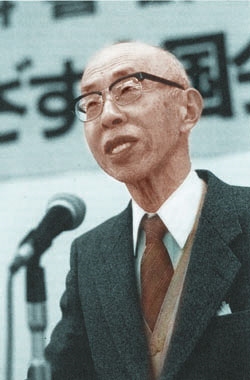
Ienga Saburo
Saburo sued the Japanese government in 1965 for trying to censor his documentation of the massacre at Nanking. Although he had some success early on, he has not had much success since the 1970’s. This results from a strong belief in Japan that there was no massacre in Nanking. Tanaka Masaaki, author of What Really Happened in Nanking, strongly believes this. His book was written for the purpose of refuting Chang’s books. He spends the book finding evidence that what Chang said happened was wrong. He went through her pictures and pointed out the mistakes in them which he says proves that the Rape of Nanking never happened.
When going through these readings one question was at the forefront of my mind. Why did Germany accept their past and try to move forward, while Japan remains in denial? Chang mentions that one reason for this could be that the state of Israel sued for reparations, while the survivors of Nanking stayed silent which I agree with. If there is no public accountability than wrongdoings are easily tucked away and it becomes much harder to accept past wrongdoings in the future.


I do think that a huge factor in Japan’s relatively successful denial of the massacre would be the silence of the victims. However, I still am not sure how they could cover this up to such an extent, even going as far as to blatantly censor Saburo’s textbook and fight him legally for decades. It really feels like something suspicious had to have happened for so many survivors to stay silent and for no other countries to hold Japan accountable. I suppose that something like this happening in times of war gives you more ways to justify it/bend the facts to make it seem ok, but it still just feels very off.
I find it interesting that the idea of Japanese denial is brought up. It is very strange that such a massive event would be passed over in history as it was. I think that the reason the Japanese were able to cover it up so well and not have to pay reparations for their actions is because of the fear from victims to speak up after the war began and so many other things were happening.
You mention that Ienga Saburo sued the Japanese government for censorship of his written textbooks, and I believe that this is just more evidence to the fact that the massacre did indeed happen. The only reason the Japanese did this was to preserve their good name they had been trying to keep after the war, which is strange to me as many of their other atrocities were already well known such as the Bataan Death March.
You bring a lot of attention to Saburo and his attempts to level the truth in Japan, I think his testimony shows great evidence that Japan willingly censored their books in order to preserve honor. It also shows contrary to Masaaki, he seemed to have more to loose which is convincing.
It makes sense that Saburo’s attempt to publicize the Rape of Nanking was unpopular in postwar Japan. Japan, perhaps even more so than Germany, was determined to look forward and forget their failures in WWII. However, this also worked to obscure the details of the war, which is what we see with the lack of coverage of the Rape of Nanking in Japanese textbooks.
I was also struck by Ienga Saburo when watching the documentary excerpts. I think that his persistence as well as the fairly large group of his supporters can be taken as a positive thing — despite the fact that he hasn’t succeeded in changing textbooks there are still Japanese people who are listening to him and supporting his efforts.
I really think that your inclusion and emphasis of Saburo is extremely significant and helps to clearly justify arguments against Masaaki. The manner in which you presented this information on Saburo and the censorship that Japan tried to limit him to really applies heavily with the comparison of arguments with other authors. Good job of establishing this discussion and emphasizing certain points to state your case.