Palestine past World War II is a tricky subject. Those who lived their all of a sudden had to deal with other groups of displaced Jews coming into their land and taking it for themselves because other governments claimed it was their right. When people started to move into that area it was not a peaceful time. The displaced Jews displaced the people that were living on the land. Some of the displaced Palestine’s moved to other regions in the country, others moved to other Arabian countries while other moved to the United States.
Moving is not an easy thing to do. I have moved 6 times over 19 years and the transition from one house to another was not smooth even when the move was 7 minuets down the road. Others had it far worst. Karen E. Riley translated Returning to Haifa a story about a couple that returns home, Palestine, to be reunited with their son that they had left they when he was five months old. I had left my Barbies in my old room and begged my parents to go back to get them hours after I noticed I did not have them. This family, Safiyya and Said had to do so much more than get in their cars and travel seven minuets down the road. They had to deal with customs, a new city that was once their homeland and the horrible memories of what had happened to cause them to leave. They were not the only ones that wanted to go home In Nakba, edited by Ahmad H Sa’di and Lila Abu-Lughod mention through out that the narrators father wanted to go home (to Palestine), to see it before he died. Also, things were changing their women could work (page 87) and students that spoke English were in charge of checkpoints (page 86). Just going home to a land that had changed so much was not an easy trip, not physically, not mentally.
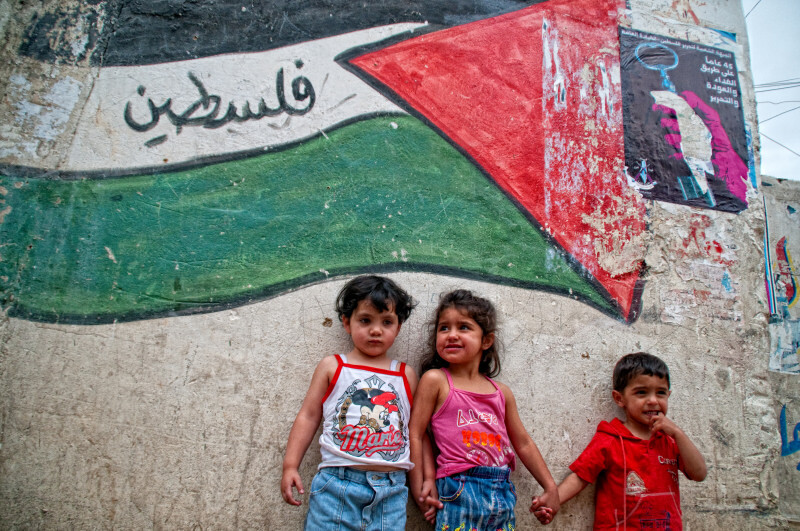
Looking towards present day, the future for Safiyya, there has been a push for people to return to Palestine. The picture above is trying to show the solidarity of Palestine but that is far from true. Those that live in Palestine and are not Jewish or want to be a part of Israel are met with confrontation and discrimination. Honestly, how can their me equality and no discrimination when three of the worlds major religions claim heritage to that land. Christians, Jews and Muslims all claim their start their but they do not see each other as equals and whomever has control of the government calls the shot on which religion has claim of that area.


I think the point you made about displaced Jews displacing Arabs. The fact that multiple people each felt that they had a right to the land because of something that happened to them is interesting.
I think the emphasis upon not just being displaced but also even when the displaced Arabs have the opportunity to return, it is not at all what it was like they remember. As mentioned in class, people have extremely strong bonds, in particular emotional bonds to their homes where they lived, raised families, and interacted with their community. Losing this extremely important piece of a person’s live would absolutely be a challenge to overcome mentally.
With the idea of moving, the pain that comes from it can sometimes be intense. Like you, I have moved at least once and every time I see my old house the memories still come from it that makes me miss it. For the Palestinians, this pain was much worse seeing how most will never see their homes again.