“His blue American passport allowed him to sit on the beach where he swam as a boy with dolphins and turtles, the beach his mother could see from her window as she drank her coffee. It was his unthreatening white hair and turtleneck shirts that allowed him to pass as a foreigner, not a dangerous or despised Arab “native.” The yellow license plates that identified his car as Israeli and thus gave him freedom of movement allowed him to pull up unnoticed alongside the others in the parking lot at the beach. (Cars sold to temporary visitors who need not pay taxes always have this color license plates, like other Israeli cars, distinguishing them from the cars of the West Bank or Gaza.) These, not the sepia of his poster, were the vivid colors of his return to Jaffa.” (Return to Half Ruins by L. Abu Lughod 91)
While the above quote is quite long I believe it to be a perfect explanation of the situation in Palestine for the former citizens that were pushed out in favor of the new Jewish citizens. However, to these people many of the reasons they believed Palestine to be home were still there. It is quite a moving concept that sitting on the beach looking at the ocean (like the one below) one could forget about all the changes that had befallen their homeland. While the politics, the language and even their own homes had been changed some things would remain the same.This is demonstrated in the quote, “As he used to do twenty years before, he slowed the car down to its lowest gear before reaching the curve that he knew concealed a difficult rocky surface behind it. He turned the car the way he always did and climbed the slope, watching out for the exact spot on the narrowing road.” (Returning to Haifa 160). While some things change many stay the same.
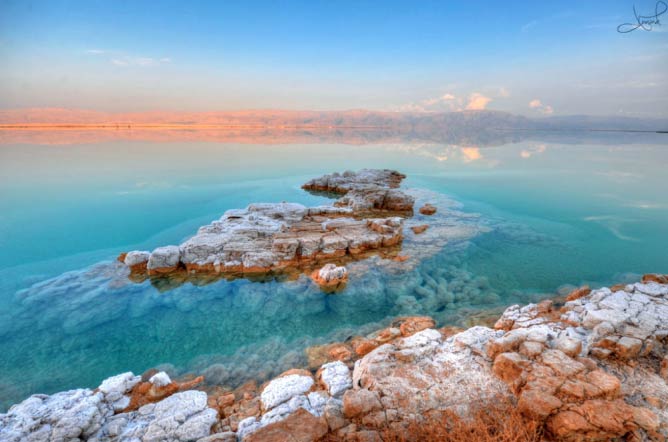
The above picture is one of the famous Israeli beaches, formerly the beaches of Palestine which the father of the author may have been referring to.
However, the first quote also reveals a particularly disturbing truth regarding the changing hierarchy in Palestine. The author refers to the American passport, her father’s light skin and even the foreigner plates on their car being what allowed them to fit into the country of her father’s youth. It was not his memories or his roots that gained him acceptance in his home country, but his ties to to the Western allies of the new state of Israel.
For all intents and purposes it seemed that Israeli’s simply wanted the country to themselves and hoped that the Palestinian’s would abandon their homeland. This hope is articulated by “a distinguished Irish journalist [who] characterized the Zionist hope from the early part of the twentieth century that the Palestinians would disappear as ‘the wordless wish.'” (Return to Half Ruins 88) However, I feel as though anyone being pushed out of their homes might react in a similar way to the Palestinians.
This reaction is depicted in the Kanafani article, “I came to have a look at my house. This place where you are living is my house. Your presence here is a sorry comedy that will end one day by the power of the sword. If you wish, you can shoot me right here on the spot, but this is still my house. I’ve waited years to return.” (Returning to Haifa 174) Palestinians viewed this as no different than any other conquest or colonial power. These were invaders that had taken their homes and no matter what those that were forced out would still consider this stolen territory theirs. As Abu-Lughod says, “I could never think of Israelis without the sharp black and white images of the French colonial commandos in Pontecorvo’s brilliant film Battle of Algiers kicking down doors.” (Return to Half Ruins 94) This sums up the level of hostility that many associated with the Jewish conquerors in Palestine.
However, no matter how oppressed that the Palestinian people were their history and their roots could never truly be destroyed. As Abu-Lughod states, “From this, he knew that Palestinian parents were still teaching their children the old names of things even as Palestine was being buried, erased, and rewritten by Israel.” (Return to Half Ruins 84)
If knowledge of the old country and the old culture continues to be passed from generation to generation the “wordless wish” (Return to Half Ruins 88) of the Israelis will never come to fruition.


It is interesting to see how long cultural ideas can last after that culture’s people have been moved. Seeing how there are multiple names for the same places and locations in Palestine shows the strength of these cultural ideas. These personal stories from people returning really show how these ideas affect people.
I think it is interesting how the Jewish people had been discriminated against for years in Europe during the war, and had been treated so poorly, especially considering the Holocaust. It seems ridiculous that they would turn around and try to kick a group of people out of their home, and oppress them as well.
I really liked the quote that you chose, and I think it’s interesting (and very sad) how people had to change who they were in order to fit in in the land they grew up in. These readings showed the importance of connection to a homeland, and I think you highlighted this connection for the Palestinians very well.
I agree with Caroline that you did an excellent job of describing this experience of the Palestinians and their desire to return. I particularly liked that you mentioned part of the reason that Ibrahim was able to return was by assuming this different, Western identity that removed suspicion from him.
I think your idea about the way in which people were able to get back in because of their western ties is very interesting. It shows the way in which these people had no power even though this had been a land they lived in and how strong ties to. Its a sad to think about how these people couldn’t go to a place that they had such strong ties to and had to go through a western ally of israel to do it.
I think that you made good points about how the Palestinian people were pushed out of their homeland and there are certainly documented cases of forced expulsions of and even massacres of Palestinian civilians. However, I think that it is important to remember that part of of the Palestinian exodus was voluntary and simply a result of people fleeing from war.
What drew you to use the quote in the beginning of your post? Was it the emotional factor that makes the reader more sympathetic towards them?
Your imagery in this post was top notch. Overall, you did a great job at viscerally relating the experiences told in the sources to your audience. This really helped to give a connection to the displaced Palestinians who are often overlooked in the shadow of the Holocaust and Jewish self-determination. While I don’t believe there is a right or wrong side, I think that both parties should work on creating a better future for both people instead of dwelling on the mistakes of the past.