Wars are polarizing times that often result in changes in ideology. Each side is forced to pick a side and they then revert to the extremes of the ideological spectrum of that particular issue. Human rights became that issue in World War II.
Human rights talks gained importance during the World War II period first and foremost due to wartime atrocities. Particularly those committed by Nazi Germany. Due to, as M. Mazower said (author of The Strange Triumph of Human Rights), the “contempt for the rights of the individual” (386 Mazower)by the Nazis, Americans naturally shot to the opposite side of the ring. This resulted in an extreme push for human rights by Americans in order to further separate themselves from their wartime enemies.
Another prominent issue that caused the increased support for humanitarianism during this time, was the failure of isolationist policies. As a result of the American failed attempt at isolationism, Americans felt as though they needed to rally behind a cause. This cause became humanitarianism, which then became the vehicle for American intervention abroad. As Franklin D. Roosevelt said freedom could only be found through “the supremacy of human rights everywhere”. By stating that human rights were a worldwide issue that reigns above all other issues the president created the foot hold America needed to emerge from their isolationism. This once again demonstrates the polarizing nature of war. Isolationism failed so Americans became interventionists.
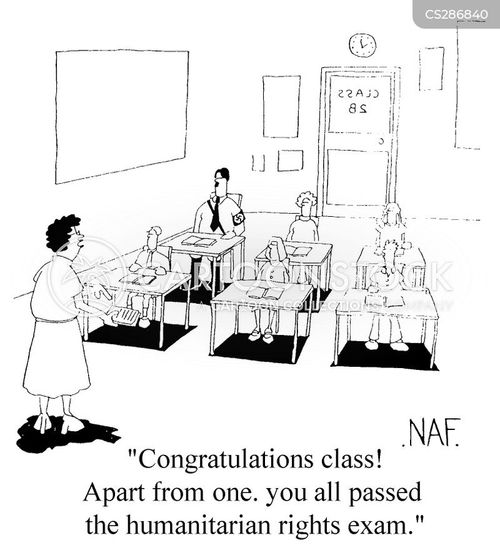
A cartoon denoting the team-like rallying the humanitarian effort provided.
As the cartoon above depicts, humanitarianism became another issue to rally behind. Americans and the other allied powers used humanitarian efforts to strengthen their reasons for engaging in war. Humanitarianism became another tool to mobilize all citizens of a country. As human rights were depicted as being an international responsibility, and therefore justification for war.


I just felt like you didn’t touch on the fact that while the U.S. rallied for human rights they continued their policies of African-American segregation and discrimination. It wasn’t all sunshine postwar.
What Franklin D. Roosevelt said, that freedom could only be achieved by obtaining “the supremacy of human rights everywhere,” is interesting because that is almost impossible to do. It’s a nice idea, and in a utopian society it would probably work out, but ultimately in today’s society, obtaining a perfect world where everyone recognizes other’s human and civil rights is nearly impossible.
I think it is interesting that you mention the humanitarianism that developed following the post war period. I also considered how this issue became a rallying force in the post war era, but I hadn’t thought of the point that the failure of isolationism fed further into the onset of humanitarianism. Another important matter to consider related to humanitarianism is some of the contradictions in the policies of the great powers. The U.S. did move into the postwar era at the forefront of the charge to promote human rights, but at the same time it was persecuting minorities within it’s own borders.
Do you feel that The Family of Man exhibit was attaching America’s isolationism as well as promoting humanitarianism, or that anti isolationism was the result of the exhibit’s message of globalization?
Hey Shelby, I love your cartoon. I loved how you traced the lineage of this redefining of what human rights are back to WWII and Axis war crimes. That historical context is pretty important when you consider just how impactful these rights are to both domestic and international policy.
The comic panel that you choose was good for the point that you were trying to convey, also, i found it very funny. You say that the US used human rights as an ability to intervene in other states affairs but don’t mention how it used in the US. I would be interested to hear you thoughts on how the US used these human rights.
I thought that you did a great job explaining the link between failed isolationism and humanitarian efforts in the postwar years. I think that we can even see the effects of these ‘rallying cries’ in a modern context in the way that we, as Americans, see our humanitarian responsibilities. I would even go so far as to say that this interventionalist approach is part of what defines us as a nation.
Interesting to see that you mentioned that humanitarianism grew after the war due to what happened. I think after everything happening the way it did in the war, humanitarianism was emphasized.