Even after the shockingly high casualties of World War II finally stopped rising in 1945, a series of new crises emerged in Europe that guaranteed peace time was not going to be without further violence and inhumanity. In Tara Zahra’s ‘A Human Treasure’ and Gerard Daniel Cohen’s In War’s Wake, the flawed attempt made by the victorious allied powers to returned displaced persons (DPs) to their countries of origin is discussed. Marked by compromises, politics, and human tragedy, the effort to repair the populations of Europe’s nations was made with greater goals at hand for the emerging superpowers of the United States and the Soviet Union.
Between the diminished populations of European nations due to war casualties and the coinciding presence of millions of people who had been displaced by the war, the logical goal of the allied powers was to return those DPs to their home countries to replenish their populations. Beyond this basic reason, reconstruction after the war would require strong numbers of laborers to repair and rebuild the ruined infrastructure and industries of said countries, which meant the motivation for repatriating people was also practical and economic. In Zahra’s view, the attempt made at rebalancing the populations of European countries backfired against the architects of the effort to usher in the Cold War, while Cohen alternatively believes that the Cold War was already underway by the time negotiations between the US and USSR over repatriation began.
Zahra’s explanation certainly accounts for the social aspects of the DP crisis. Her thinking is that “Contrary to histories of nationalism, of World War II, and of reconstruction that posit radical differences between Eastern and Western Europe, the history of Europe’s lost children reveals a set of shared challenges and assumptions in post-war Europe” (Zahra 2011, 349). When you consider the similarity of the struggles of European nations following the war, the US’s involvement, in instances such as its support for eastern Europeans to remain in Germany, can be construed as interference which pushed eastern European countries toward the USSR, and behind the Iron Curtain. Simultaneously, Cohen’s more traditional view that the two superpowers were already inevitably bound to seek dominion over Europe holds weight. This is proven by the tug-of-war engaged in by the US and USSR during negotiations over what exactly makes a DP eligible for refugee status and repatriation. The USSR, ever eager to claim the lives of eastern Europeans for labor or punishment, was intent on absorbing vast numbers into its population. This was opposed by vocal westerners such as First Lady Eleanor Roosevelt, who was wary of how the USSR would treat their repatriated citizens.
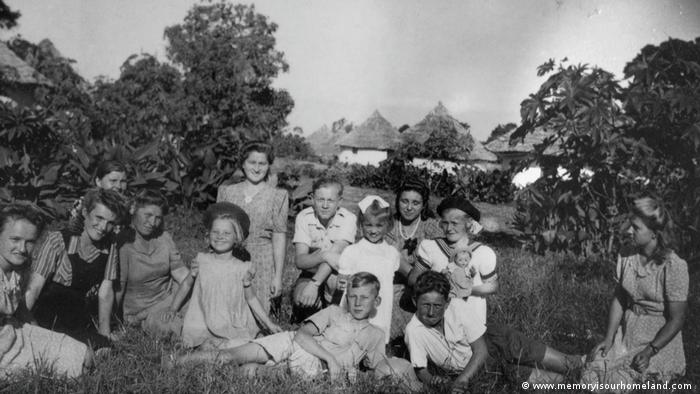
As an interesting aside, given the millions of DPs there were following WWII, some of them ended up in the most unlikely of places. Pictured above are Polish refugee DPs who wound up in Tanzania after the British government decided to relocate them from England. I highly suggest reading this short article on them: https://www.dw.com/en/when-the-polish-were-refugees-in-africa/a-49029649.
Bibliography:
Deutsche Welle. “When the Polish Were Refugees in Africa.” DW.COM, 2021. https://www.dw.com/en/when-the-polish-were-refugees-in-africa/a-49029649.
Gerard Daniel Cohen, In War’s Wake: Europe’s Displaced Persons in the Postwar Order, 2011.
Zahra, Tara. ‘A Human Treasure’ – Europe’s Displaced Children Between Nationalism and Internationalism, 2011.


It is interesting to point out the fact that the US and USSR were already at odds in the case of the displaced persons controversy. Could the outworkings of the Postwar era have caused the heightened tension between the two superpowers that characterized the Cold War? In history classes, it is often taught that simply the development of atomic weaponry and the ideological debate were the precursors to the Cold War. But a study of the Postwar period might propose new causes as well.
I agree with Clay how you point out the allied forces (US and USSR) though agreeable in ending the war, found opposing views on the DP problem. Thinking about this further it clear why the Cold War was inevitable.
It is very interesting to look at the competition between the US, USSR, and other European nations, when they were attempting to bring in new labor power from millions of Displaced Persons. I like how you brought up different factors relating to the US-USSR power conflict and how it influenced/was influenced, by the bidding war for land and people during the Postwar period.