One of the biggest atrocities of World War II was the semi colonization of Europe by Germany. Prior to this time period Europeans had always been the colonists. However, this shift from colonizers to colonized was, baffling enough, not enough to convince European powers that colonial rule was in fact cruel and oppressive. European powers attempted to continue their colonial rule in Africa, however the colonized peoples themselves rose up , led by the very leaders that World War II created.
In the words of Elizabeth Schmidt, the author of Popular Resistance and Anticolonial Mobilization,“By the end of 1944, France had been freed from German occupation. While French soldiers celebrated with their countrymen, tens of thousands of African troops, including recently freed prisoners of war, were herded into prison-like camps in central and southern France” (Schmidt 448). The irony in this situation is clear. The once conquered people of Germany emerged from the war miraculously unchanged. However, they had not changed their philosophies on colonization as a result of their occupation. Due to this baffling steadfast philosophy the colonized peoples were forced to find ways to fight back and rebel against their oppressors.
Ironically the leaders of this independence movement had been, in a sense, created by the required conscription of African men to European armies, in this case the French army. As Schmidt states, “they rapidly emerged as a self-styled elite whose worldly experience, access to cash income and consumer goods, and command of the French language gave them a new status” (Schmidt 456). In other words, the men that had once helped to free the French soon sought to free themselves from the French. This created an odd relationship where, “Although they had long served as the backbone of the colonial administration, African soldiers were politicized by their wartime experiences” (Schmidt 454). So, the knowledge and worldliness that the West Africans gained from their forced conscription into the French army led to the eventual downfall of French colonial rule.
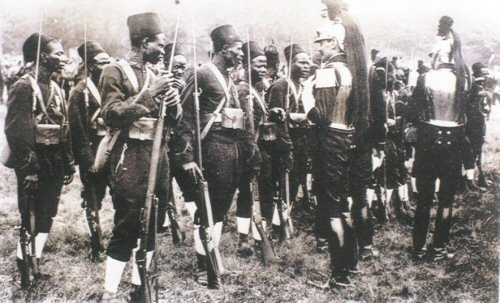
The men pictured above are members of the Tirailleurs Senegalais. They were soldiers from colonized West Africa that fought for the French.
In essence men, like those above, felt as though they had fought for the freedom of their colonial oppressors and were not granted this same freedom for themselves. As a result West Africans took things into their own hands and moved to gain their own independence. They did so through the creation and utilization of organizations like the RDA. However, it is incredibly telling and disturbing that the French did not end the practice of colonization themselves after experiencing something similar during World War II.


Maybe we should think of it instead of thinking the French should have sympathized with the Africans after being conquered themselves by the Germans we should think of it as the French reclaiming their superiority. You see this a lot in history. African-American men, who you would think would be sympathetic to women’s rights, were often some of the most hostile critics. It’s the old “I may be black but at least I’m not a woman” mentality.
I think it’s really interesting how the African veterans who returned to their homelands formed a sort of elite in their societies. It’s interesting how they used this more French-like status to form independence movements against their French colonizers.
It’s interesting to think about how France had been occupied by the Germans during WWII and had been subject to the Nazi oppression, but then would still be okay with African colonization. This can also be said about the Israelis who had just been oppressed by the Holocaust during the war and then deciding to take the homes of many Palestinians.
You discuss how the soldiers that were conscripted into the French army came back to their homeland more politicized, this makes them a sort of social elite for their people. Do you think that the people valued those who were more french like for independence movements caused some of the problem of dependency we see following decolonization?
I like the quote that you used about the elitist transformation the veterans. Do you think that this access to the home country made anyone align more with the French or made them feel more included in the empire? I remember the article saying that some people did not wish for independence , do you think that this contributed to that fact?
Excellent job linking the European and non-European perspectives! I especially liked this line right above the photo: “So, the knowledge and worldliness that the West Africans gained from their forced conscription into the French army led to the eventual downfall of French colonial rule.” I think that it is completely true and it is the ultimate irony of the colonial period.