During World War II, Hitler came to power in Germany and was in charge during the Third Reich. While Hitler was in power he forced the Jews to move to ghettos and concentration camps. The Jews lived in horrible conditions and many died. They were not given proper care, food, or living conditions in these camps. The Jews in these camps suffered greatly until they were freed when the Allies invaded Germany and defeated the Germans. Once the Jews were freed from the camps some of them did not know where to go and others were afraid to return home. One option that later became available for the displaced Jews was move to Palestine and later Israel, thanks to the Zionist movement.
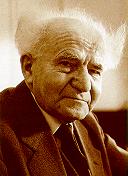
Photograph of Ben-Gurion, a major leader in the rise of Zionism
When Hitler came to power in Germany and started to terrorize the Jews, Zionists in Palestine saw this as an opportunity to help them get their own state, Israel, for the Jewish community. Zionists wanted to protect the Jewish people and were lead by Ben-Gurion (Segev 18). Ben-Gurion saw the imprisonment of the Jews in Germany as an opportunity for Zionism to rise. The Zionist came up with a plan to “negotiate with Hitler’s Nazi government in order to allow the emigration of German Jews and the transfer of their property to Palestine” (Segev 18). The “haavara agreement came about due to the similar interests between Germany’s government and the Zionist movement: the Nazis wanted the Jews out of Germany; the Zionists wanted them to come to Palestine” (Segev 20). This seemed to be a good deal between the Germans and the Zionists, but negotiations took a long time and were not coordinated well.
Despite this great idea that the Zionists came up with in order to bring the Jews to Palestine, they had some opposition from the Revisionists. “The Revisionists rejected any contact with Nazi Germany” (Segev 24) and “proposed imposing an international economic and diplomatic boycott” (Segev 26). They thought the boycott would help to stop the Nazi persecution of the Jews in Germany, while Ben-Gurion still believed that the haavara agreement was the best way to go since the German Jews would come to settle in Palestine (Segev 26). The Zionists wanted more displaced Jews to come to Palestine so that they could get their own land. This occurred later on when the Zionist argued that the “Jews needed their own independent country because they would always face discrimination and persecution anyplace else” (Segev 34). This led to the creation of the state of Israel in 1948.
Zionism continued to grow and spread after the war was over in Germany as well. All the displaced Jews from the camps in Germany did not know where to go once they were freed. “Between 1948 and 1949, some twenty-two thousand DPs were sent to Palestine/Israel from the DP camps in Germany, Italy, Austria, and Cyprus…” (Patt 100). There was one interesting aspect of the German DPs following the liberation from the camps; “half of the surviving population was under the age of twenty-five, and some 80 percent were under the age forty” (Patt 101). These young people were left alone and abandoned and did not have family to help them. Zionists organizations were able to help them make decisions on what they should do, which was helpful since fifty thousand Jewish DPs did not know what to do after they were freed (Patt 102). The Zionist movement helped the DPs by introducing them to training farms, called hakhsharot, so that they would be prepared to be productive members of Irsael.
The Zionist movement provided a new sanctuary for the displaced Jews and fought for their emigration to Palestine during WWII. The Zionist movement also helped to train the Jewish DPs so that they could have a better life in Israel. The movement provided a conscience for young Jewish people who did not know where to go or what to do after they were freed from Nazi concentration camps. However, one thing to take into account for the Zionist movement is that they wanted to bring the German Jews to Palestine during the war so that they could try to form their own state, not just for the safety of the German Jews who were being persecuted. One thing we have to consider is if the Zionist movement was actually trying to save the German Jews or were they just trying to accomplish their political agenda and gain their own state? Also did the Zionist get any special rewards when they were negotiating with Nazi Germany during WWII? Was the Zionist movement helpful and effective in the relocation of the Jews or did this lead to more issues down the road?
Sources


I liked that you included information on how many young Jews had no where to go following the War. It seems as if the Zionist took it upon themselves to transition these men from the horrors of the Holocaust into members of the community. I liked that you pointed out that they trained them to be farmers and gave them opportunities to better themselves before they settled in Palestine.
You raise an interesting question about the intentions of Zionists in Palestine. I think that in helping the Jewish people, gaining a state for their nation was part of the aid given. I do not think helping the Jewish community and building their own state are mutually exclusive. Having a goal of a place/nation where you feel like you belong was very important to the rehabilitation of Jewish DPs. I believe the community that was built following the Holocaust allowed for the continuation of a culture that MIGHT have been lost, especially considering that most of the Jewish people in Europe were overwhelmingly youths. I find it hard to believe that Zionists had only political intentions in creating a state, just so that they could be in control of a state.
I wish I could edit “MIGHT” to lower case letters.
I liked how you proposed the question at the end of your post on what ind of motivation did Palestine really have? I believe that the emigration would have been the best solution, but I have no idea what their true incentives were. I hope that primarily they wanted to save them and bring them to a safer pace rather than getting up their numbers. Great post!